Most people drive straight through Gold Hill without stopping. Here’s why you shouldn’t.
Twenty minutes north of Medford on the Rogue-Umpqua Scenic Byway, the small town of Gold Hill sits beside the Rogue River without much fanfare. Most people pass through without slowing down. That’s a mistake — because within a single mile of river, you can stand at a waterfall that was the most important salmon-fishing site of an entire civilization, and then drive five minutes north to a cascade that only the locals seem to know about.
Ti’lomikh Falls and Dillon Falls are both on the Rogue River, both free, and both easy to reach. Combined, they make one of the most rewarding and underappreciated half-day outings in the Rogue Valley.
Stop One: Ti’lomikh Falls and 10,000 Years of History
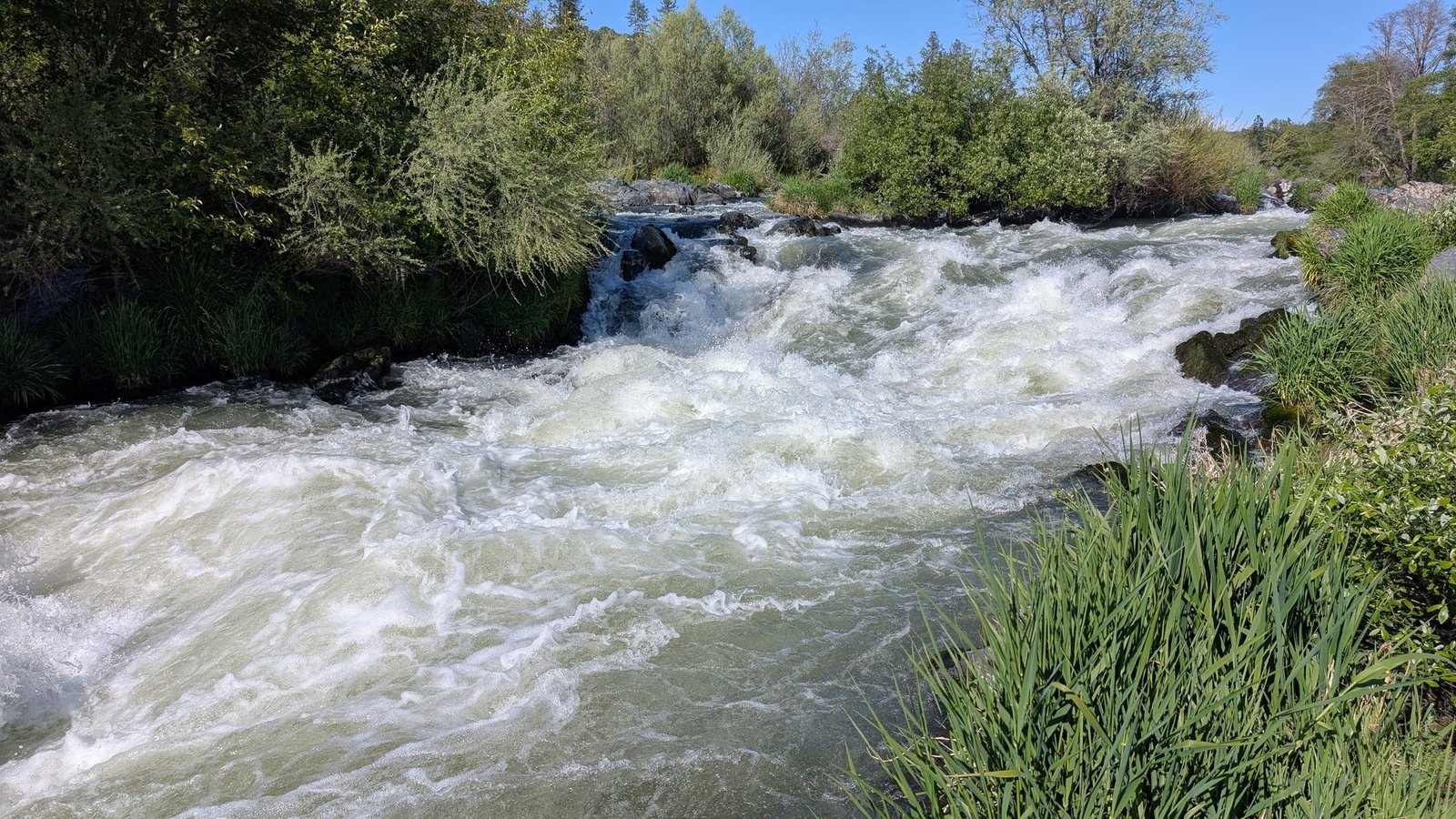
Ti’lomikh Falls is modest in height — about 8 feet of rapids and cascade where the Rogue River crosses a volcanic ledge. Don’t let that fool you. This is one of the most historically significant natural sites in Oregon.
For thousands of years, Ti’lomikh was the most important seasonal gathering place of the Takelma people, who knew this stretch of river as intimately as any people have ever known a place. Every spring, families traveled here from across the region to harvest the Chinook salmon that stacked up below the falls — fish so abundant and so central to Takelma life that when Euro-American settlers began claiming the river in the 1850s, the conflict over access helped ignite the Rogue River Indian Wars of 1855–56. The Takelma were ultimately forcibly removed to the Grand Ronde Reservation. The Confederated Tribes of Grand Ronde maintain their cultural connection to Ti’lomikh today.
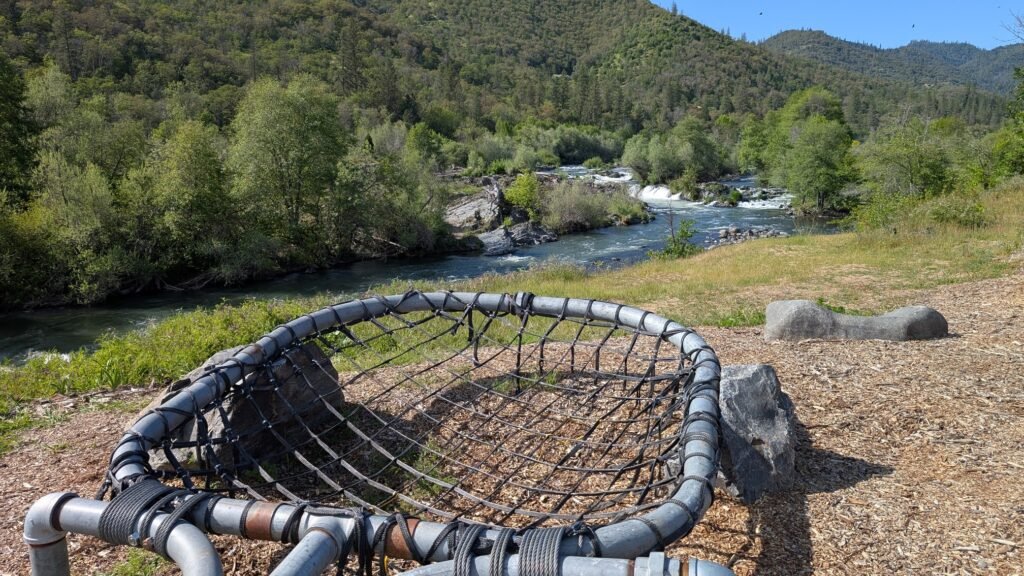
There are two ways to experience Ti’lomikh. The west bank parking area just north of the Gold Hill Sports Park gives you an easy riverside walk to the falls themselves. For more context — and a better view of the lower section — cross the Gold Hill bridge, take a sharp left onto Upper River Road, and look for the Storytelling Stone at Ti’lomikh Falls pull-off on your left. Here you’ll find interpretive panels and a small sculpture garden that tell the site’s history in full. Spend time here. It earns it.
Parking: Free. Both viewpoints have easy roadside access with no fee.
Stop Two: Dillon Falls — The Local Secret
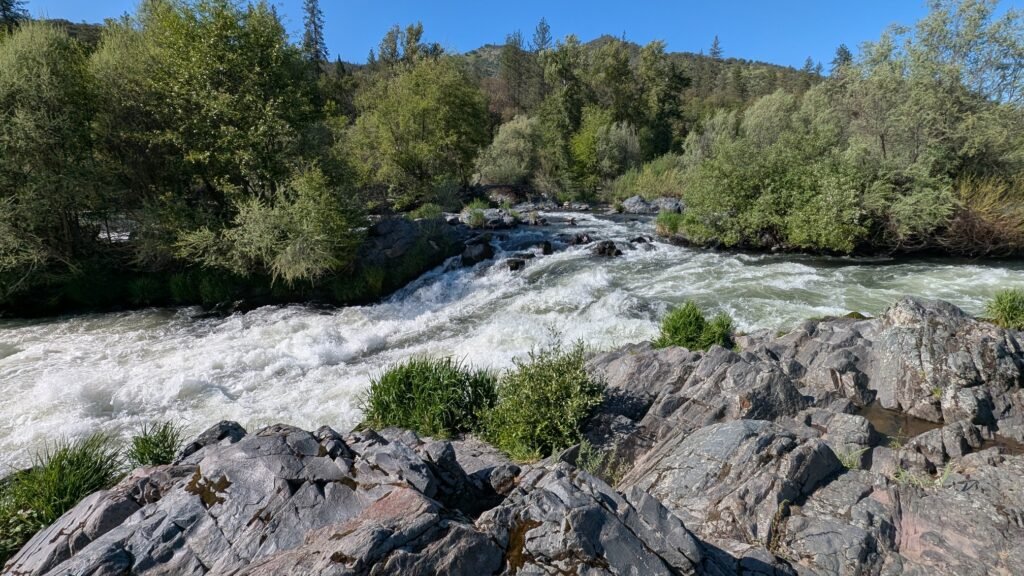
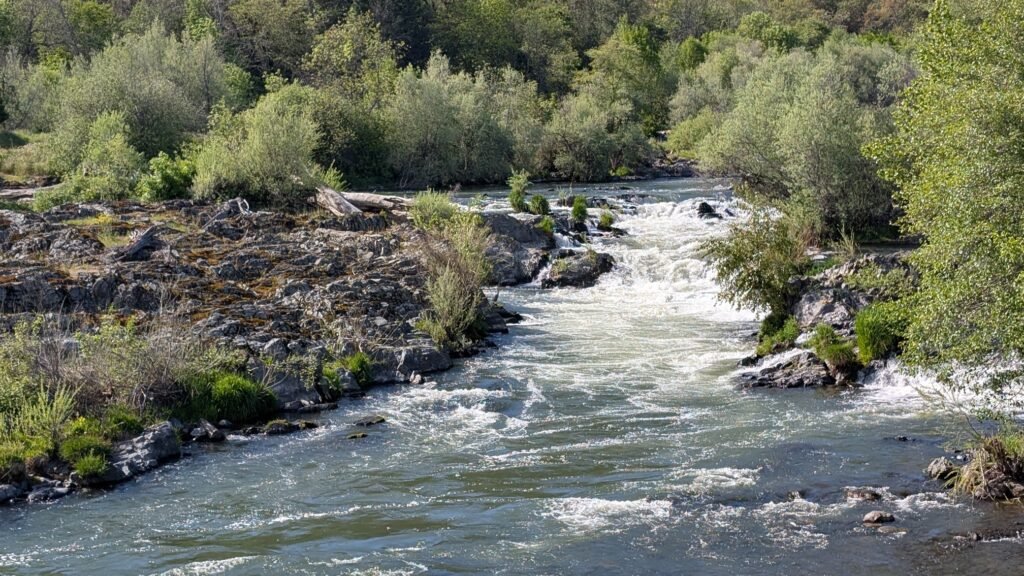
From the Ti’lomikh Storytelling Stone, simply keep driving north on Upper River Road. You’re already on the right road. Follow it until you hit the railroad tracks, then turn onto the rough dirt track that parallels the tracks. High clearance helps but it’s a short enough stretch to walk if needed. The unmarked parking area gives you access to the east bank trail and the best views of Dillon Falls — a 15-foot Rogue River cascade that rushes powerfully in spring and settles into a scenic riffle by summer.
You can also view Dillon Falls from the Gold Nugget Waysides on the west side of the river (two paved pullouts just off the byway heading north from Gold Hill), but the east bank gives you the full picture — particularly in spring when the falls are running hard.
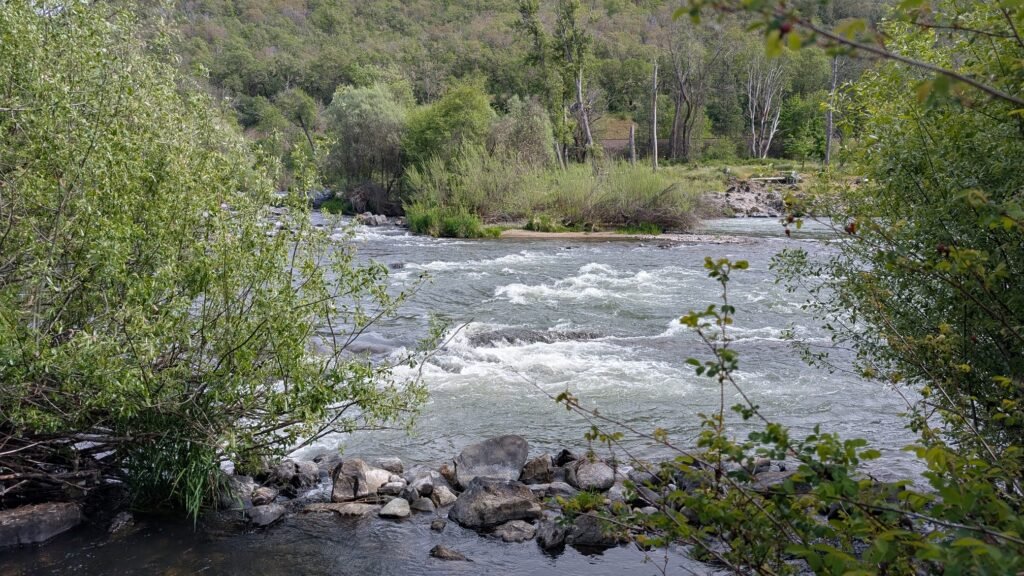
This is genuinely a local’s waterfall. No signage, no crowds, just the Rogue doing what it does best.
The Practical Details
From Medford: Take I-5 north to Exit 40 (Gold Hill), or drive north on the Rogue-Umpqua Scenic Byway through Shady Cove. Total drive time: about 25–30 minutes.
Suggested order:
- West bank Ti’lomikh Falls viewpoint (Gold Hill Sports Park area)
- Cross the bridge — Storytelling Stone on Upper River Road
- Continue north to Dillon Falls east bank viewpoint (past railroad tracks)
- Optional: swing back to the Gold Nugget Waysides for the west bank Dillon perspective
Total time: 1.5 to 2 hours at an easy pace. Both stops are free. Bring water and shoes you don’t mind getting dusty on the dirt track.
Best season: Spring for the highest water on both falls. Ti’lomikh and Dillon run year-round, but spring Chinook season (April–June) adds an extra layer — salmon gathering below Ti’lomikh in the same runs that sustained the Takelma for millennia.
See the full profiles for Ti’lomikh Falls and Dillon Falls in our Oregon Waterfall Directory.