Most people drive through Butte Falls without knowing a 15-foot waterfall is the reason the town exists at all
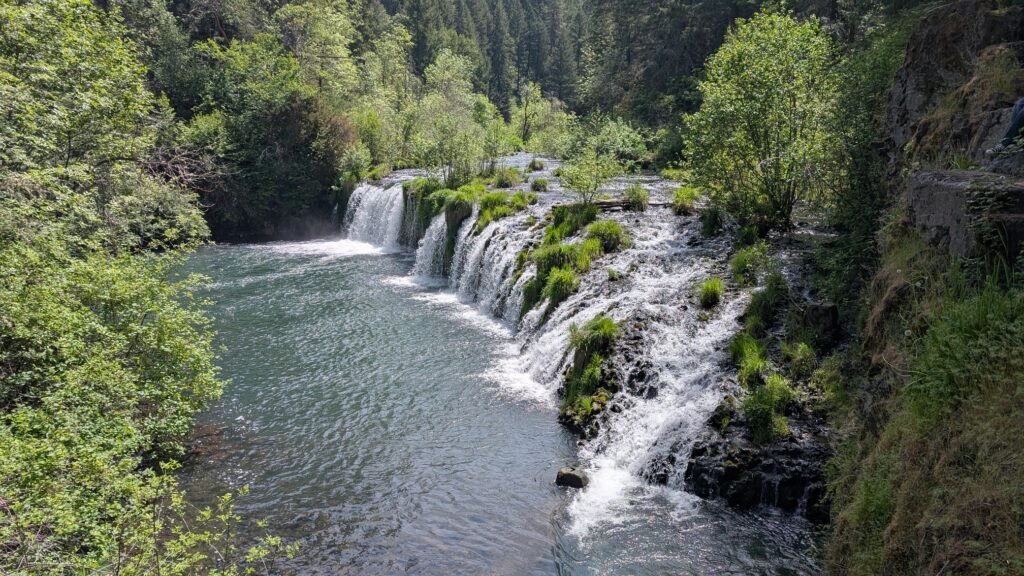
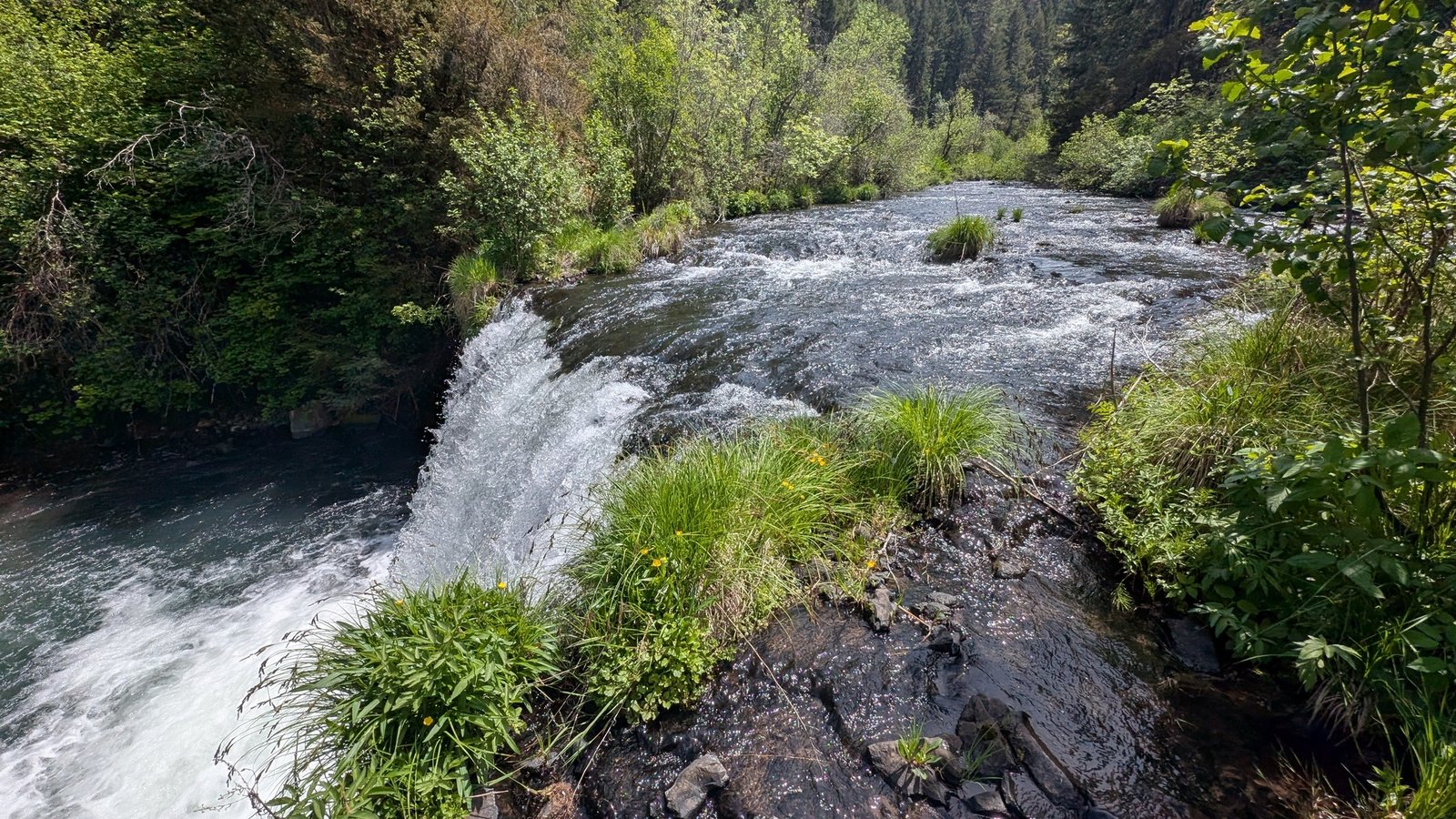
Butte Falls on Big Butte Creek — the waterfall that put this Southern Oregon town on the map
There’s a small town in Jackson County, 40 miles northeast of Medford, that most people blow through on their way somewhere else. It has cattle guards at its entrances, a parade that circles through town twice every Fourth of July, and a population of about 435. It also has one of the best untold origin stories in Southern Oregon.
The town is called Butte Falls. And it’s named for the waterfall that caused someone, in 1906, to build a sawmill right next to it — and the town that grew up around that mill.
A Waterfall Runs Through It
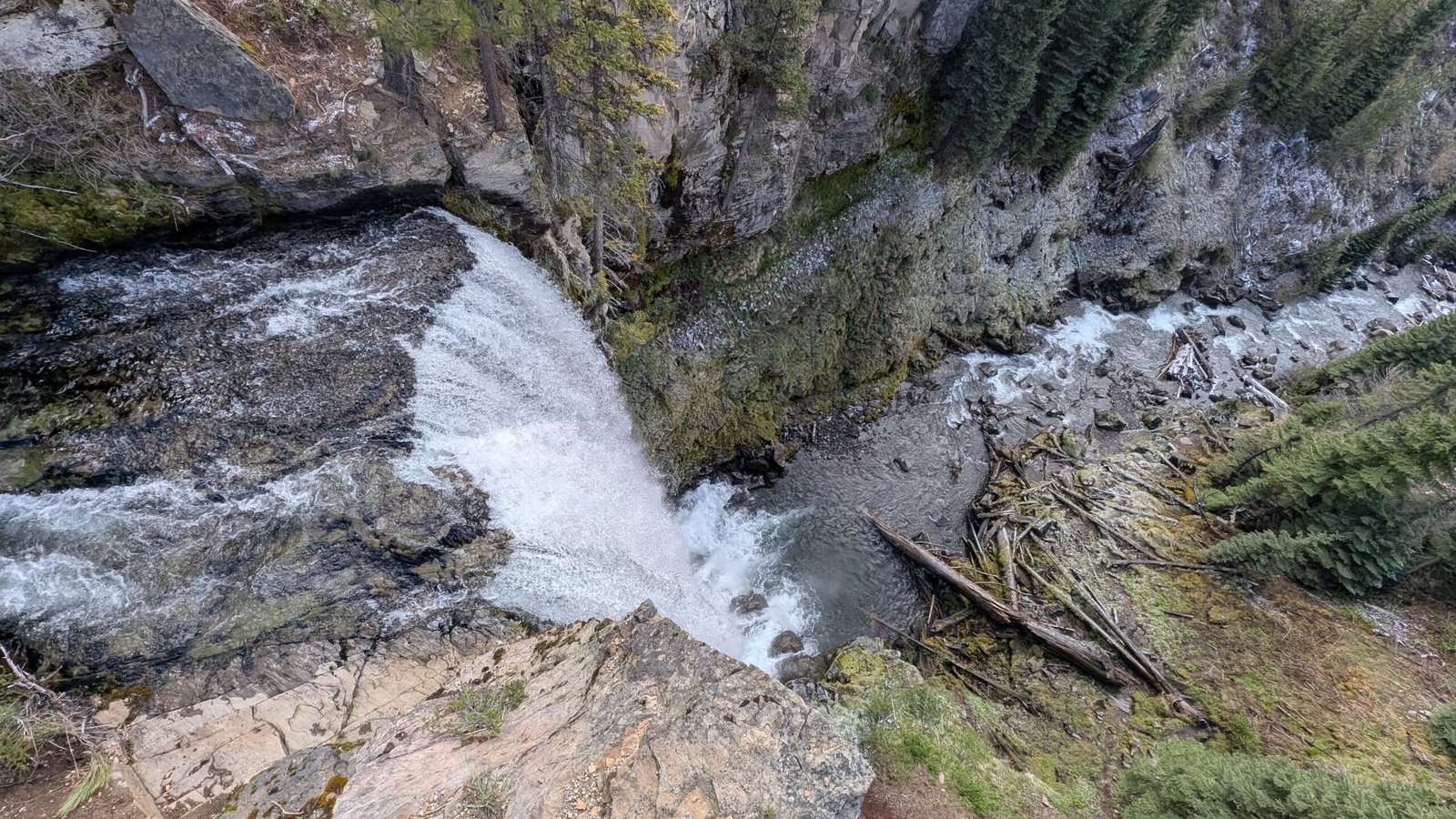
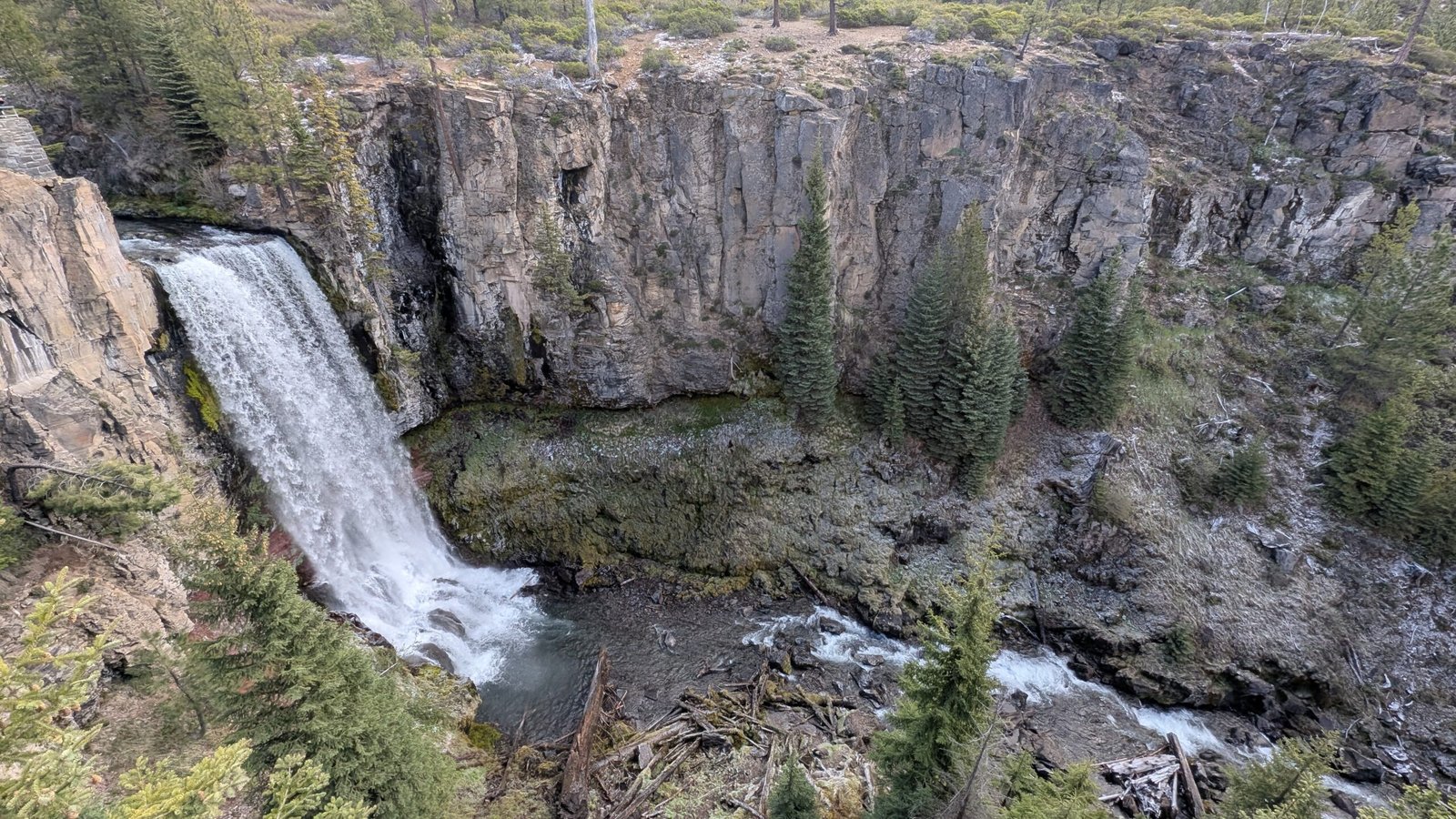
Butte Falls is a broad 15-foot block cascade on Big Butte Creek, set at 2,358 feet elevation on the forested Big Butte Plateau at the edge of town. It’s not a tall waterfall — it spreads wide across the full width of the creek rather than plunging dramatically — but it’s beautiful, accessible in under five minutes from the parking lot, and surrounded by exactly the kind of mossy, ponderosa-shaded creek canyon that makes Southern Oregon such exceptional waterfall country.
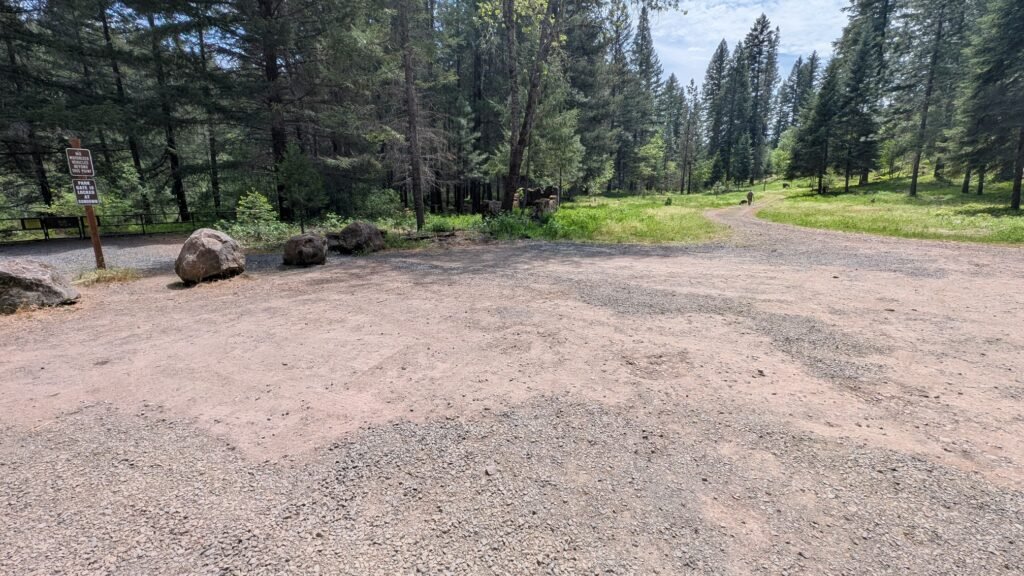
The falls are less than five minutes from the parking area at the historic mill site.
The falls are free, there’s no fee to park, and you can be standing at the edge of the water in less time than it takes to read this post.
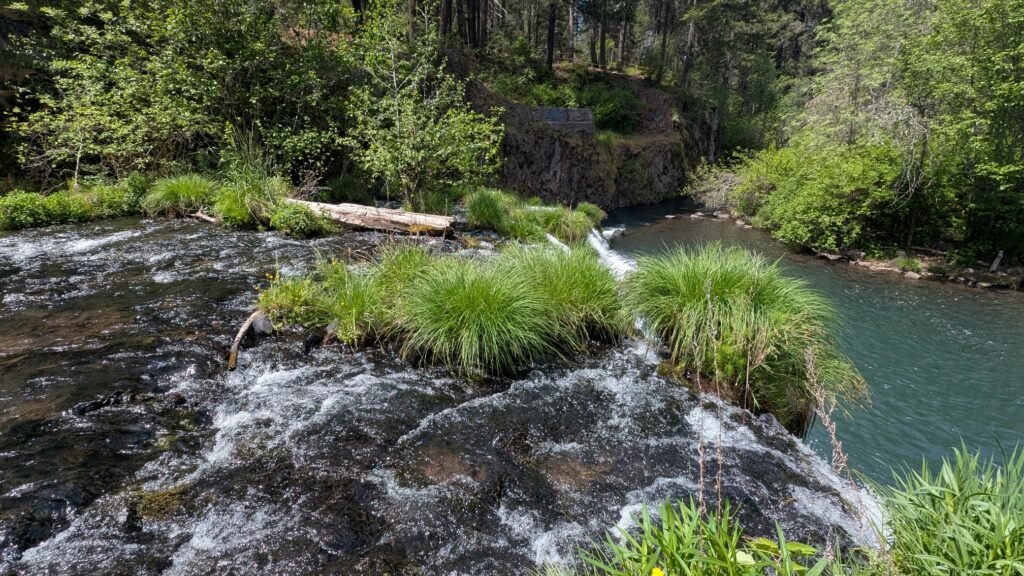
Big Butte Creek spreads across a wide basalt ledge — the same ledge that powered a sawmill for decades.
The Mill That Made the Town
Here’s the part most visitors miss entirely. When you’re standing at the falls, look around you. What you’re standing on is the old mill site — and if you know where to look, you can still see the foundations.
In 1906, the Butte Falls Sugar Pine Company built a sawmill right here, at the falls on Big Butte Creek, and platted a town site on the flat ground above the canyon. By 1910, the Pacific and Eastern Railroad had arrived from Medford, the town had a hotel, a bank, and a schoolhouse, and the mill was cutting timber all the way to the slopes of Mt. McLoughlin. During World War I, it cut railroad ties that were shipped to France. The falls weren’t just scenery — they were an industrial asset in the heart of a boomtown.
The mill changed hands, moved, and eventually closed, as mills do. The last major timber operator — Medford Corporation — was liquidated in a hostile corporate takeover in the 1980s, stripping the surrounding forests almost bare. The town adapted. In recent years, residents purchased 430 acres of surrounding forest and created the Butte Falls Community Forest, building a future around conservation and recreation rather than industrial logging. A wildfire in 2020 came within half a mile of town. The community is still here.
The foundations are still here too. Standing at the falls and knowing what once stood beside them makes the visit something different — not just a waterfall stop, but a compressed history of a century of Oregon logging, boom, loss, and stubborn survival.
Plan Your Visit
Butte Falls is an easy 40-mile drive northeast of Medford via Highway 62 and the Butte Falls Highway — and worth combining with other Southern Oregon waterfall destinations on the same corridor. Mill Creek Falls (173 ft) and Barr Creek Falls (240 ft) are both within 25 miles, making Butte Falls a natural warm-up stop on a full day of waterfall visiting. While you’re in town, stop into the E.W. Smith House and Bill Edmondson Memorial Museum on Main Street — the Big Butte Historical Society keeps the story alive with photographs and artifacts from the mill years.
The waterfall that built the town is still running. It always will be.